
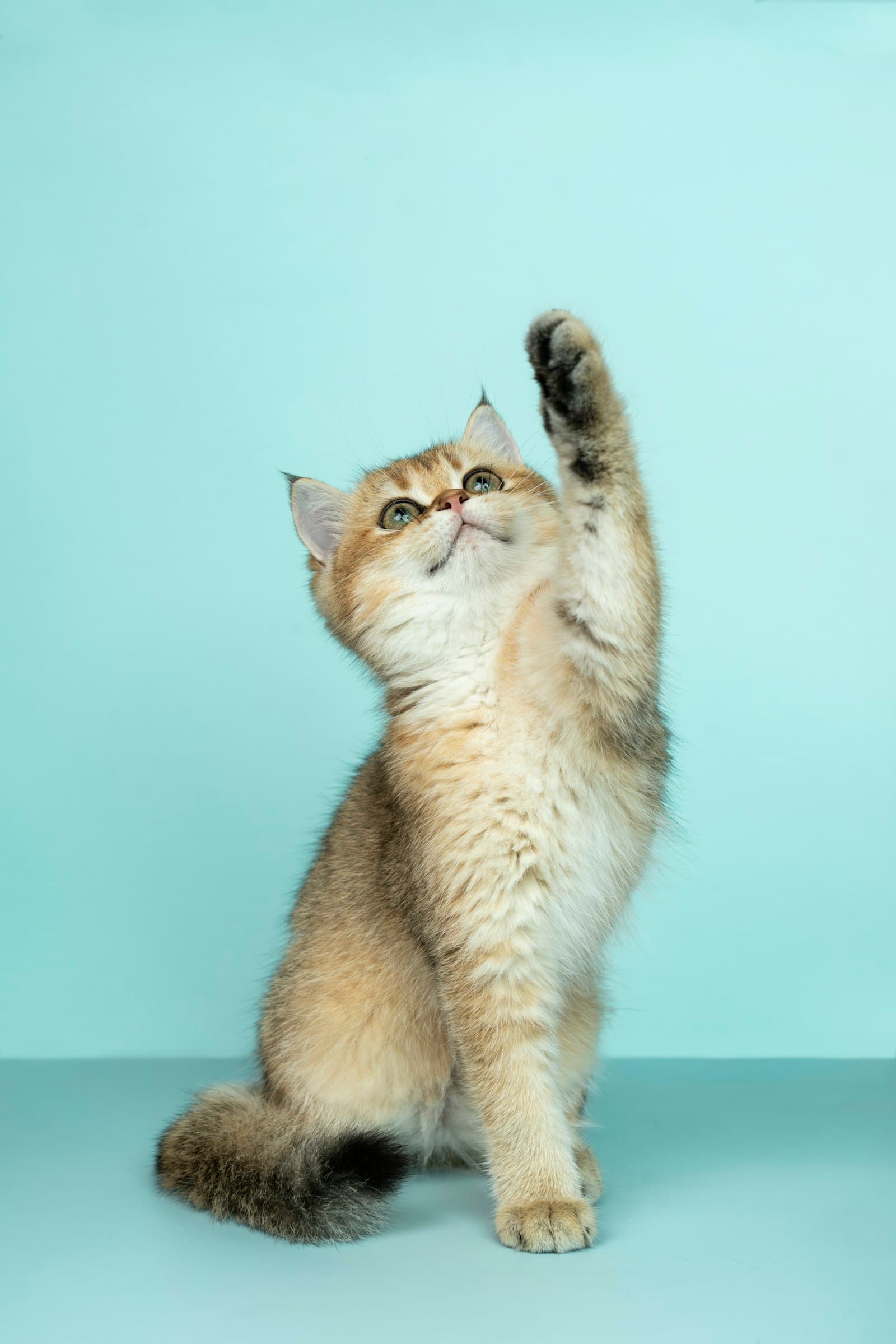
BPC-157 for cats is a growing search among owners who already research supplements carefully. The peptide is a fifteen-amino-acid chain with a deep rodent research record and a pharmacokinetic study in beagle dogs. Dedicated feline outcome trials are thin, so the path is clear: read the published species-labeled studies, see what the cat community is doing with that file, and shop a documented American-made vial.
For the dog-focused deep dive, read BPC-157 for Dogs. For the basics, start with What Are Peptides?. For shopping the full catalog, open where to buy pet peptides.
What BPC-157 is
BPC-157 is a chain of fifteen amino acids derived from a protective protein found in gastric juice. The letters stand for Body Protection Compound, a name from the research group that has published on it since the 1990s (Sikiric et al., 2011, Current Pharmaceutical Design). One property keeps it in the conversation: it holds up in gastric juice instead of falling apart on contact, which is why so much of the rodent work involves the gut as well as tendon and soft tissue.
What the research shows
A 2022 pharmacokinetic study in rats and beagle dogs found intramuscular BPC-157 reached 45 to 51 percent bioavailability in dogs (He et al., 2022, Frontiers in Pharmacology). That study mapped absorption, distribution, metabolism and excretion across intravenous and intramuscular routes. It is the companion-animal pharmacokinetic anchor in the BPC-157 file, and it is the paper cat owners and dog owners both bring to the veterinary table.
Research on BPC-157 in rats found accelerated repair of transected Achilles tendon, with improved load of failure, elasticity and function (Staresinic et al., 2003, Journal of Orthopaedic Research). A 2011 follow-up reported faster tendon outgrowth, better cell survival and increased cell migration in rat tendon cells (Chang et al., 2011, Journal of Applied Physiology). Gut models in rats reported accelerated closure of colocutaneous fistulas (Klicek et al., 2008, Journal of Pharmacological Sciences), and a review describes a strong angiogenic profile across gastrointestinal models (Sikiric et al., 2011, Current Pharmaceutical Design).
Those papers are why BPC-157 leads the conversation for dogs, cats and horses. The species on each citation stays labeled so you can weigh the file with your veterinarian instead of guessing from a product page alone.
What cat owners are doing and finding
Cat owners who read labels and PubMed links approach BPC-157 the same way they approach any serious supplement: demand a certificate of analysis, prefer American-made synthesis, and bring the citations to a veterinarian who already knows the animal. In community discussions, the same owners who follow GHK-Cu for skin and coat research also follow BPC-157 for the tendon and gut literature, and many compare the Recovery Stack when they want BPC-157 and TB-500 together.
What they look for is documentation. Verified purity above 99 percent on published lots, a QR code to the lot report, and a shop that names the species of every study it cites. That is the standard on our Quality page and every BPC-157 vial we ship. Read the COA checklist in How to Read a Peptide Certificate of Analysis before you order.
How to shop BPC-157 for your cat
Order BPC-157 when you want the single peptide with the deepest published file. Choose the Recovery Stack when you want BPC-157 and TB-500 in one vial. Compare blends on Glow vs Klow if you also want GHK-Cu in the same order, and use best peptides for dogs as a model for how we map goals to products across companion animals.
Free US shipping starts at two hundred dollars. Many first orders add bacteriostatic water so the peptide and the diluent arrive together and the cart clears the free-shipping line in one step.
Every lot is third-party tested for identity and purity. Download the full COA packet from Quality, then decide with your veterinarian. When you are ready, the shop is the direct path to American-made peptides with paperwork that travels with the product. That is the same promise on every vial we sell: made in a certified US laboratory, verified by an independent lab, and documented lot by lot for the owners who read the research first and then shop with confidence.
Asked often
Has BPC-157 been studied in cats?
Published BPC-157 work is strongest in rodent tendon and gut models, with a pharmacokinetic study in rats and beagle dogs. Dedicated feline outcome trials are not the headline of that file. Cat owners still follow the same research map dog owners use, and they shop American-made BPC-157 that ships with a third-party certificate of analysis for every lot.
Why do cat owners look at BPC-157?
BPC-157 is a fifteen-amino-acid peptide with a deep rodent research record in tendon and gut models, plus dog pharmacokinetic data. Cat owners who already research supplements carefully bring that literature to their veterinarian and want a documented vial. Our BPC-157 is made in a certified US laboratory and verified by an independent lab for identity and purity.
Where can I buy BPC-157 for cats?
Order American-made BPC-157 from Pure Pet Peptide. Every lot ships with a certificate of analysis, and verified catalog lots clear 99 percent purity on the Quality page. Many owners also compare the Recovery Stack when they want BPC-157 and TB-500 in one vial, then decide with their veterinarian.
Is BPC-157 the same product for cats and dogs?
Yes. The vial is the same American-made BPC-157 with the same third-party testing and lot documentation. Species-specific decisions belong with your veterinarian. What changes is the research conversation you bring: dog pharmacokinetic data plus rodent tissue models, then a clear COA for the lot you order.
References
- He L, Feng D, Guo H, Zhou Y, Li Z, Zhang K, Zhang W, Wang S, Wang Z, et al. Pharmacokinetics, distribution, metabolism, and excretion of body-protective compound 157, a potential drug for treating various wounds, in rats and dogs. Front Pharmacol. 2022;13:1026182. PubMed 36588717 DOI
- Staresinic M, Sebecic B, Patrlj L, Jadrijevic S, Suknaic S, Perovic D, Aralica G, Zarkovic N, Borovic S, et al. Gastric pentadecapeptide BPC 157 accelerates healing of transected rat Achilles tendon and in vitro stimulates tendocytes growth. J Orthop Res. 2003;21(6):976-83. PubMed 14554208 DOI
- Chang CH, Tsai WC, Lin MS, Hsu YH, Pang JH. The promoting effect of pentadecapeptide BPC 157 on tendon healing involves tendon outgrowth, cell survival, and cell migration. J Appl Physiol (1985). 2011;110(3):774-80. PubMed 21030672 DOI
- Klicek R, Sever M, Radic B, Drmic D, Kocman I, Zoricic I, Vuksic T, Ivica M, Barisic I, et al. Pentadecapeptide BPC 157, in clinical trials as a therapy for inflammatory bowel disease (PL14736), is effective in the healing of colocutaneous fistulas in rats: role of the nitric oxide-system. J Pharmacol Sci. 2008;108(1):7-17. PubMed 18818478 DOI
- Sikiric P, Seiwerth S, Rucman R, Turkovic B, Rokotov DS, Brcic L, Sever M, Klicek R, Radic B, et al. Stable gastric pentadecapeptide BPC 157: novel therapy in gastrointestinal tract. Curr Pharm Des. 2011;17(16):1612-32. PubMed 21548867 DOI
From the shop
Explore the peptides
American-made BPC-157, TB-500 and GHK-Cu, third-party tested with >99% purity on verified lots.
Related in the journal
- What Are Peptides? A Pet Owner's Guide to the ResearchFrom insulin in the 1920s to 60-plus approved peptide drugs, see how peptides work and which are studied in dogs, cats and horses. Then shop peptides.
- TB-500 for Dogs: What the Research ShowsTB-500 is the synthetic fragment of thymosin beta 4 behind tissue-repair research. See the species-labeled studies, then shop American-made TB-500.
- BPC-157 for Dogs: What the Research Actually ShowsSee what published BPC-157 studies found in rats and beagle dogs, from tendon repair to gut research. Then shop American-made BPC-157 for your pet.