Fig. 01 — every lot ships with a certificate of analysis.
Companion-animal research
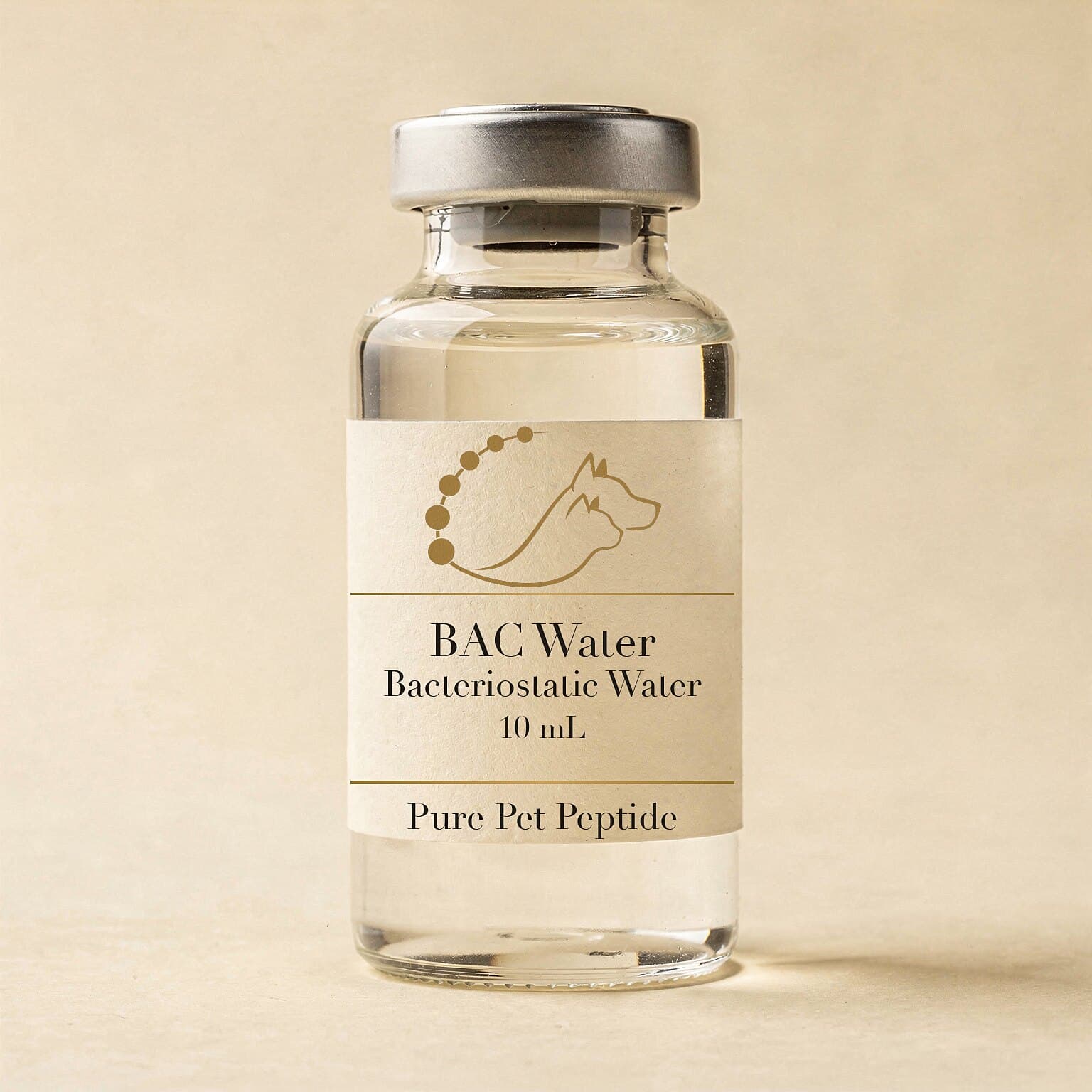
BAC Water
Sterile bacteriostatic water in a sealed multi-dose vial.
$15.0010 mL
Third-party tested
American made
Certified lab
Important: This product is sterile bacteriostatic water, a general-purpose laboratory supply. It has not been evaluated by the FDA and is not intended to diagnose, treat, cure, or prevent any disease. This product is not a substitute for veterinary care. Always consult a licensed veterinarian before giving any supplement to your animal. Not for human use.
The research context
Bacteriostatic water is sterile water preserved with 0.9% benzyl alcohol, the standard laboratory diluent. Supplied in a sealed 10 mL multi-dose vial, lot-tracked from our US lab partner.
Questions about whether BAC Water fits your animal's situation are for your veterinarian — they know the history, and the literature is preclinical.
Questions
About BAC Water
What is bacteriostatic water?+
It is sterile water with 0.9% benzyl alcohol added as a preservative, supplied in a sealed multi-dose vial. It is the standard diluent used across laboratory settings.
What is it used for?+
It is a general-purpose laboratory diluent. We never provide preparation, mixing, or administration instructions — those questions belong with a licensed veterinarian who knows your animal.
How should I store it?+
Keep the vial sealed until needed, stored in a cool, dry place away from direct light.
Is every vial lot-tracked?+
Yes. Every vial ships sealed and lot-tracked from our US lab partner.
We don't publish protocols or usage guidance. For community research reports, we like The Pet Peptide Ledger. A community-run research library we read ourselves.
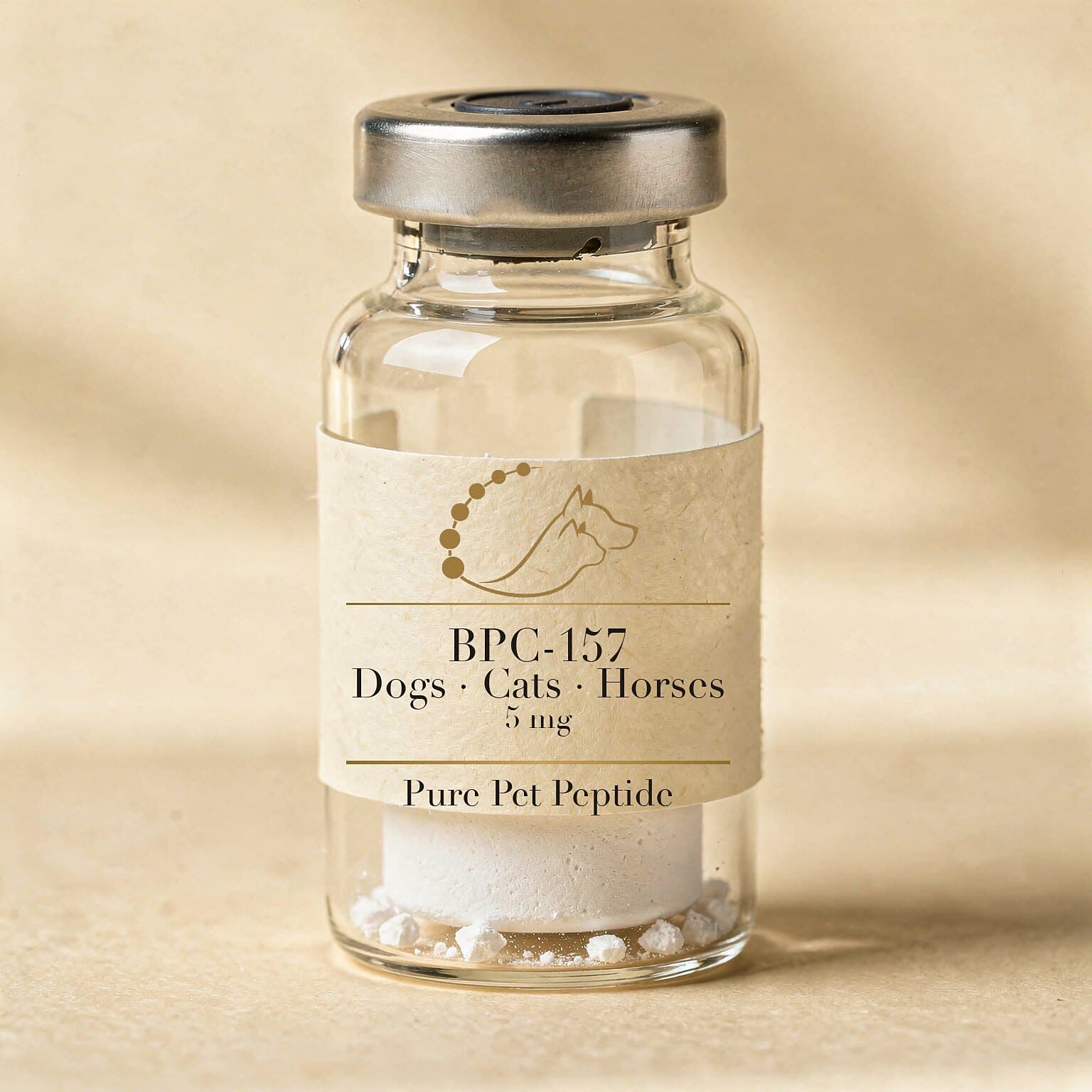
BPC-157 is the most-researched peptide in the recovery literature. A pharmacokinetic study in beagle dogs mapped how the compound moves through the body, and a deep stack of tendon and gut-lining research shows consistent signals around the body's normal recovery processes. New studies publish every year, and your veterinarian can help you follow them.
The mobility peptide behind the soft-tissue research.
What the research shows
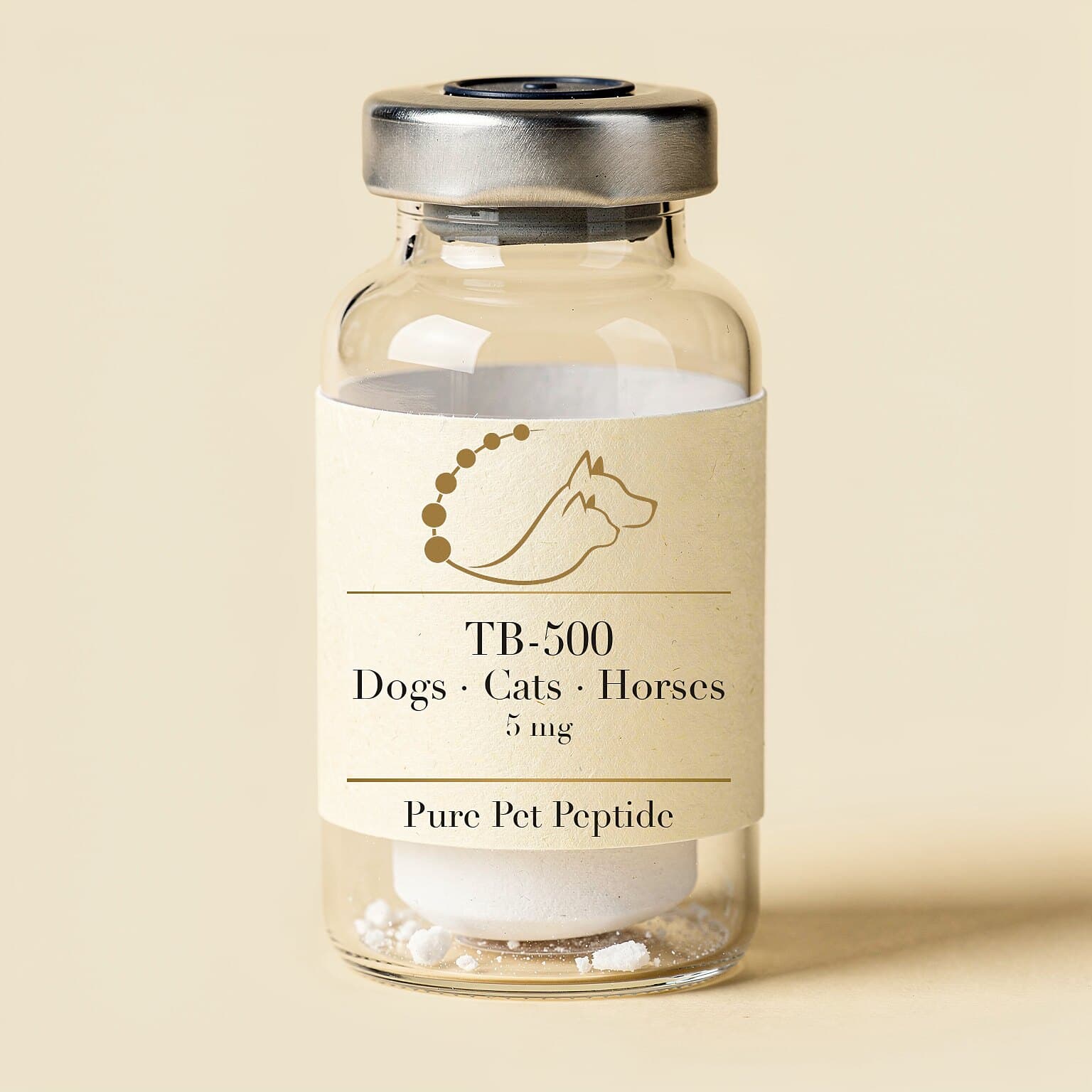
TB-500 is a fragment of thymosin beta-4, the peptide behind decades of soft-tissue research. It is studied for its role in cell migration and tissue maintenance, and the equine side of the literature runs the longest. Your veterinarian is the right person to weigh the research for your animal.
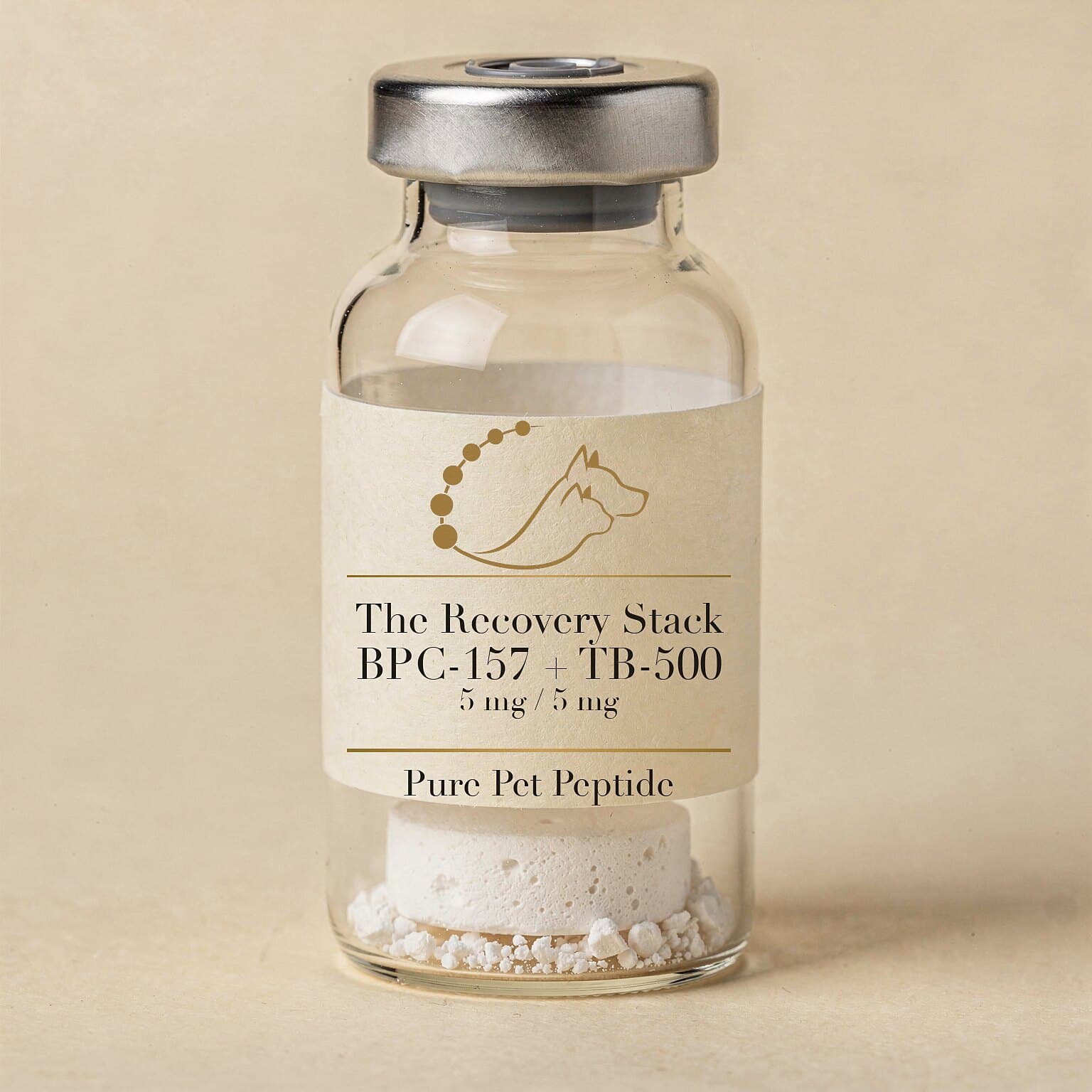
BPC-157 and TB-500 in one vial. The most-studied pairing in the field.
What the research shows
The pairing shows up throughout the literature because the two sequences are studied for complementary pathways: gut lining and tissue maintenance on one side, soft-tissue mobility on the other. Each compound carries its own research record, and the stack is the most popular combination in the space. Read the studies with your veterinarian and decide together.