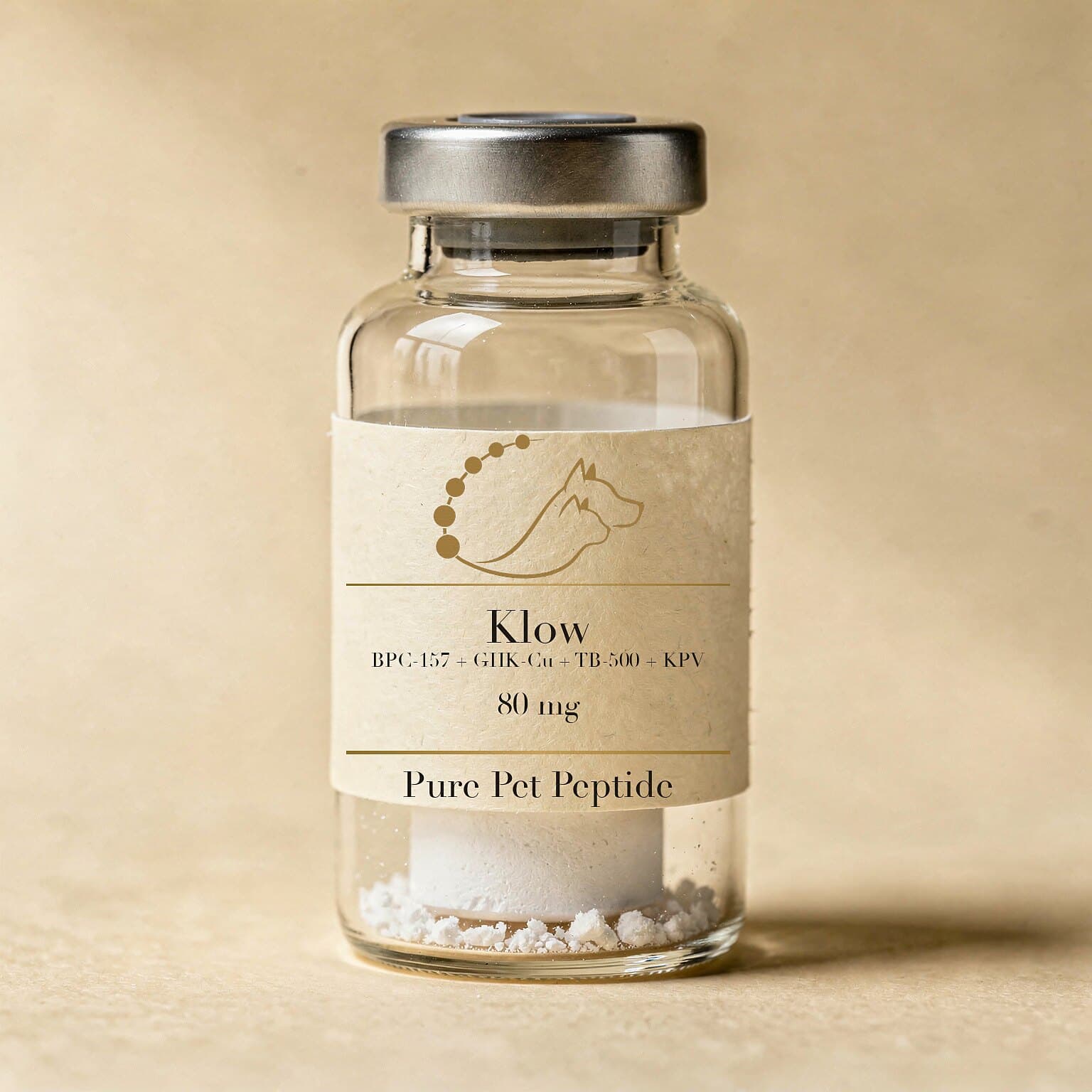
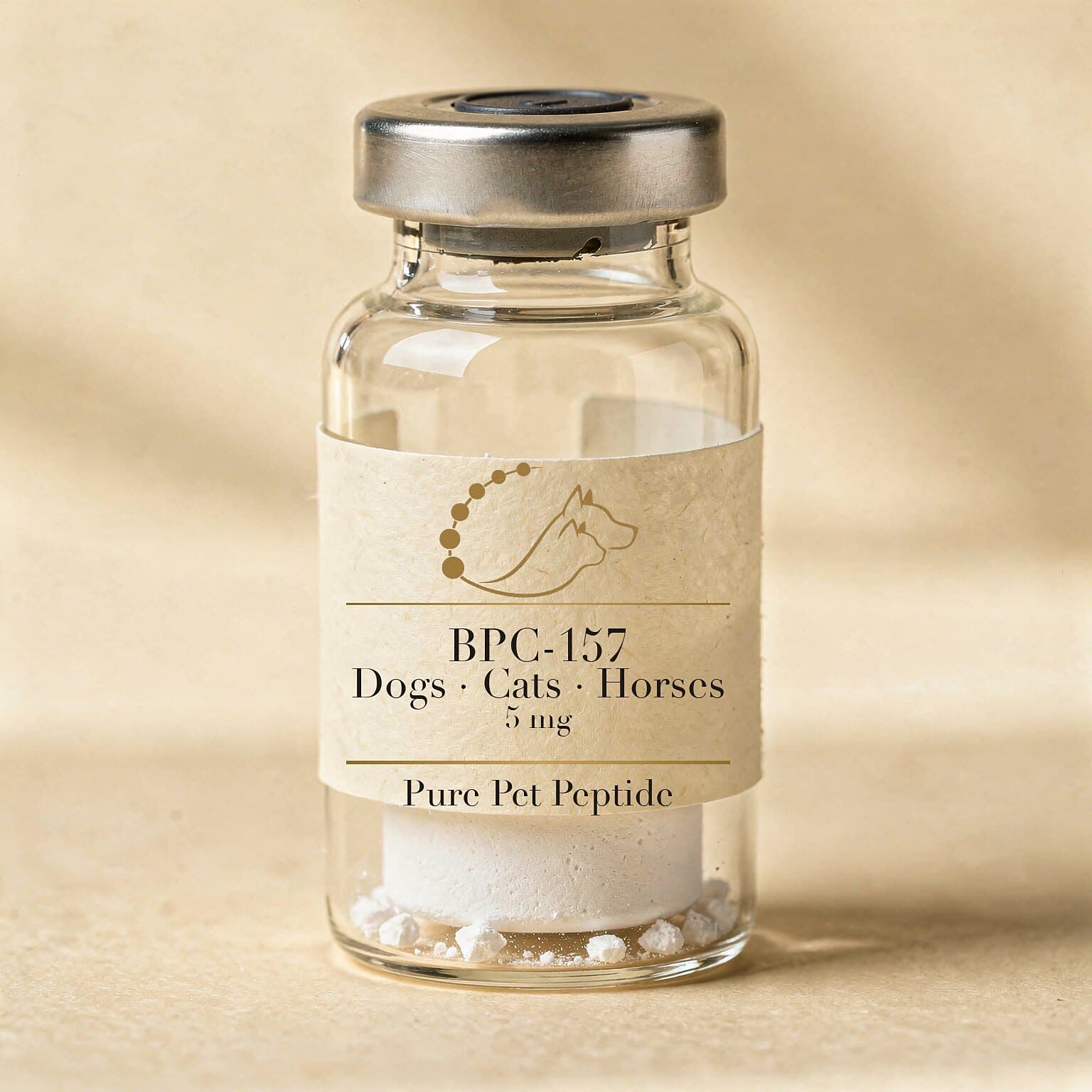
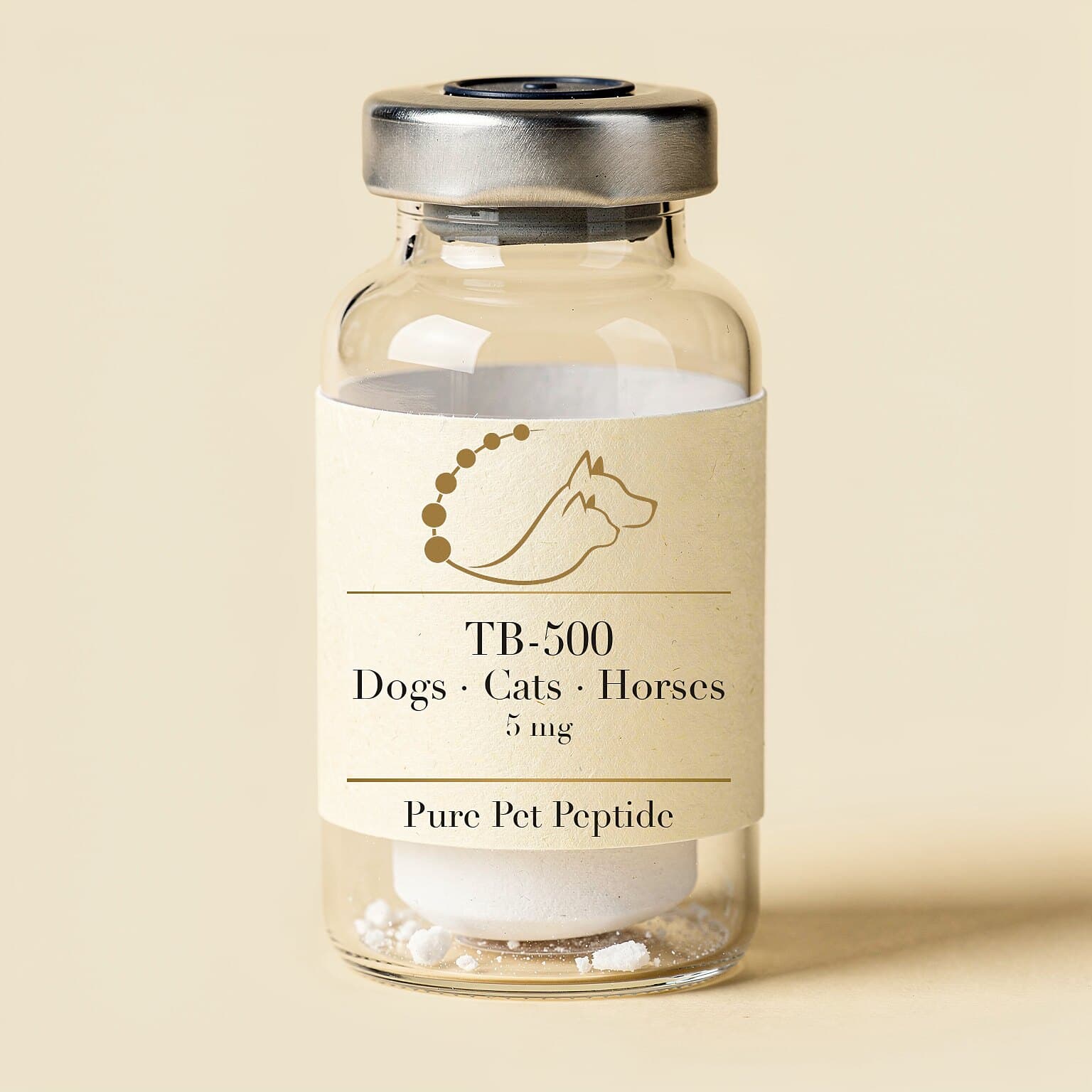
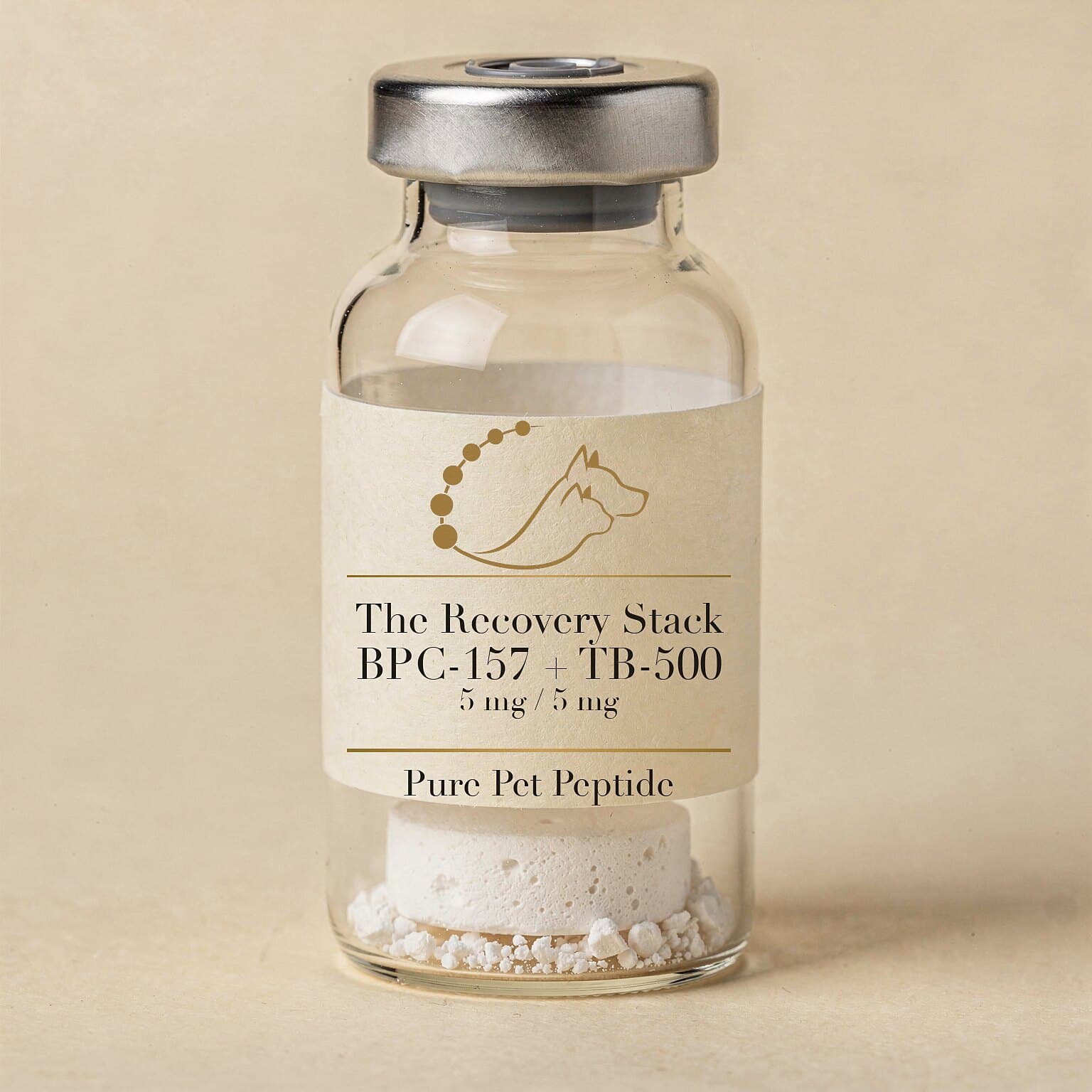
Fig. 01 — every lot ships with a certificate of analysis.
Companion-animal research
Klow
The gut-and-immune blend, built on KPV research.
$239.9980 mg
Third-party tested
American made
Certified lab
Important: This product is a peptide compound. It has not been evaluated by the FDA and is not intended to diagnose, treat, cure, or prevent any disease. This product is not a substitute for veterinary care. Always consult a licensed veterinarian before giving any supplement to your animal. Not for human use.
The research context
Klow combines the three Glow peptides with the KPV tripeptide — BPC-157 10 mg, GHK-Cu 50 mg, TB-500 10 mg, and KPV 10 mg in a single 80 mg vial. The four sequences are studied across the recovery, skin, and gut-and-immune corners of the literature. One vial. One certificate of analysis per lot. Made in a certified US laboratory.
Questions about whether Klow fits your animal's situation are for your veterinarian — they know the history, and the literature is preclinical.
Each 80 mg vial contains BPC-157 10 mg, GHK-Cu 50 mg, TB-500 10 mg, and KPV 10 mg. The certificate of analysis for each lot verifies identity and purity of every component.
Why is it called Klow?+
It is our KPV-anchored blend for the gut-and-immune corner of the literature — a short name for a focused formula.
Which animals is Klow researched for?+
The anchor literature spans canine and feline models. Discuss the research with your veterinarian to decide what fits your animal.
We don't publish protocols or usage guidance. For community research reports, we like The Pet Peptide Ledger. A community-run research library we read ourselves.
BPC-157 is the most-researched peptide in the recovery literature. A pharmacokinetic study in beagle dogs mapped how the compound moves through the body, and a deep stack of tendon and gut-lining research shows consistent signals around the body's normal recovery processes. New studies publish every year, and your veterinarian can help you follow them.
The mobility peptide behind the soft-tissue research.
What the research shows
TB-500 is a fragment of thymosin beta-4, the peptide behind decades of soft-tissue research. It is studied for its role in cell migration and tissue maintenance, and the equine side of the literature runs the longest. Your veterinarian is the right person to weigh the research for your animal.
BPC-157 and TB-500 in one vial. The most-studied pairing in the field.
What the research shows
The pairing shows up throughout the literature because the two sequences are studied for complementary pathways: gut lining and tissue maintenance on one side, soft-tissue mobility on the other. Each compound carries its own research record, and the stack is the most popular combination in the space. Read the studies with your veterinarian and decide together.