
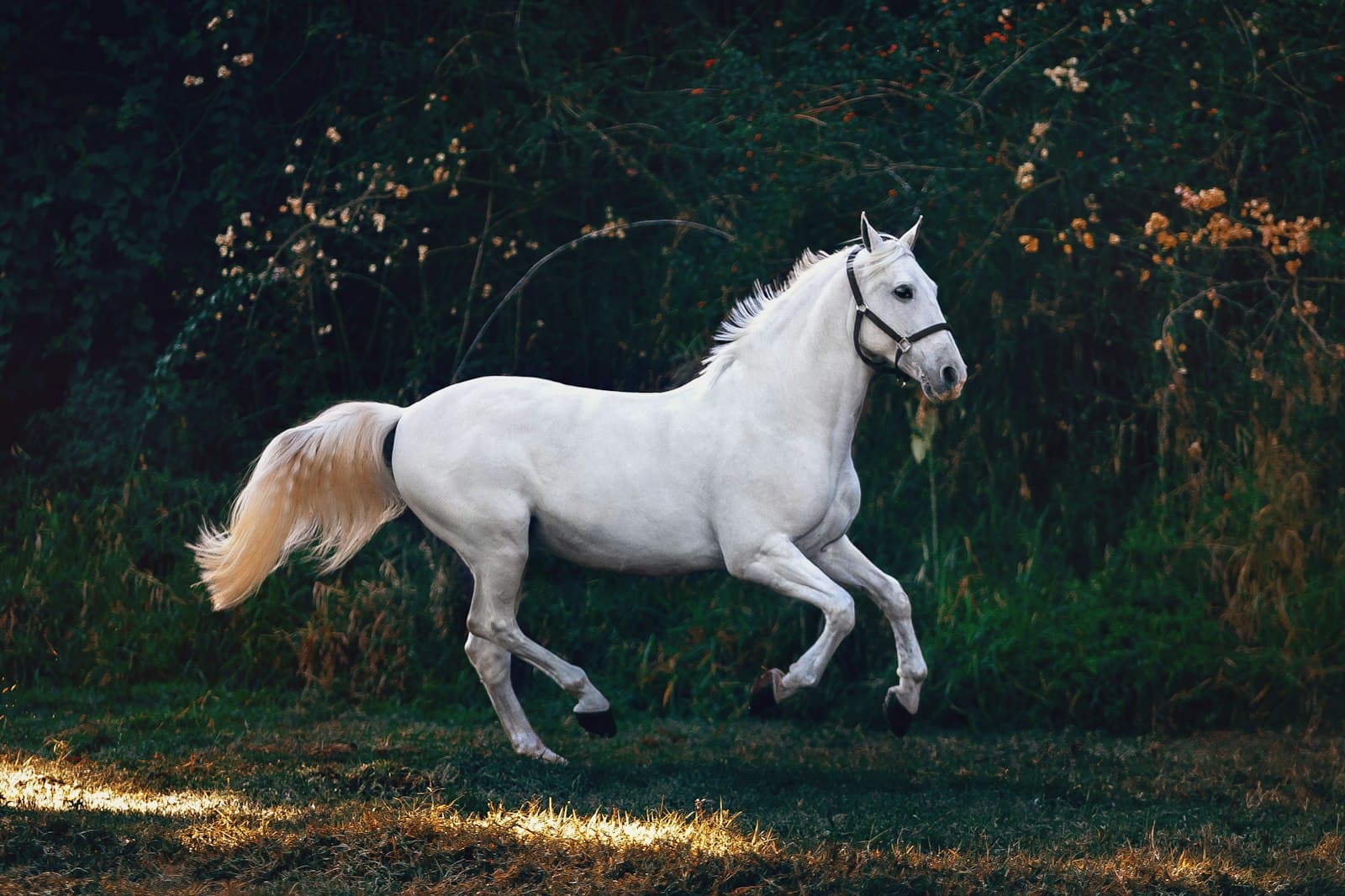
Horse owners shopping peptides for tendon and suspensory recovery want a clear research map, then a documented vial. BPC-157 and TB-500 lead that conversation, and the Recovery Stack puts both peptides in one American-made vial with a third-party certificate of analysis. Soft-tissue soundness is the expensive problem in equine life, and the published file plus barn practice both point owners toward this pairing.
Why suspensory and tendon recovery matter
The equine suspensory ligament is injury-prone and still understudied relative to how often barns face it. A 2025 review covers anatomy, loading, injury patterns and research gaps across the suspensory complex, and that review is the right starting citation when a veterinarian or owner wants the tissue context before talking peptides (Guest, 2025). Tendon and ligament recovery decides whether a horse returns to work, stays in light work or faces a long layup. That is why soft-tissue support stays at the center of equine peptide shopping on the peptides for horses hub.
What BPC-157 shows in tendon and ligament models
BPC-157 is a fifteen-amino-acid gastric peptide with one of the deepest soft-tissue research files in the category. Researchers transected the rat Achilles tendon and reported faster structural and functional recovery with BPC-157, including stimulated tendocyte growth in culture (Staresinic et al., 2003). A follow-up study added cellular detail: tendon outgrowth, cell survival and cell migration improved in the BPC-157 groups (Chang et al., 2011). The same peptide moved into a rat medial collateral ligament model with improved ligament repair outcomes (Cerovecki et al., 2010). A later review framed BPC-157 across musculoskeletal soft-tissue models as a consistent presence in that literature (Gwyer et al., 2019). Together those papers are why barns reach for BPC-157 when the plan is tendon or ligament recovery support.
TB-500 and the 2026 combination study
TB-500 is the synthetic active-region fragment of thymosin beta-4, the protein behind a long tissue-repair and cell-migration research thread. A 2026 head-to-head study compared BPC-157, TB-500 and the combination in a rat Achilles model (Biçer et al., 2026). The TB-500 arm showed a higher maximum load to failure versus control, and the combination arm showed no added benefit over monotherapy. Horse owners still order the Wolverine stack, sold here as the Recovery Stack, for one-vial convenience and one lot COA. Read the deeper TB-500 equine file in TB-500 in Horses: The Equine Recovery Research and the lameness-focused map in BPC-157 for horse soft tissue and lameness recovery.
Regenerative biologics in the same barn conversation
Peptides rarely sit alone in a modern soft-tissue plan. A 2024 systematic review of stem cells and platelet-rich plasma for naturally occurring equine tendon and ligament injuries maps the biologics context owners already hear about from their veterinarians (M'Cloud et al., 2024). Shockwave, controlled exercise and regenerative products show up in the same threads as BPC-157 and TB-500 on Chronicle of the Horse and Reddit r/Equestrian. The practical pattern is complementary support under veterinary oversight, not a swap that replaces the rest of the program.
Veterinarian-reported horse cases
Beyond the rodent file, company-reported VetBioLogix cases describe BPC-157 and TB-500 used during equine soft-tissue recovery. One case follows a dressage gelding with superficial digital flexor tendon involvement through a structured rehab plan. Another follows a jumper with suspensory concerns managed alongside shockwave. Those reports sit next to a company-reported VetBioLogix observational safety study in eleven adult horses that used injectable BPC-157 with TB-500 and reported no adverse events through follow-up. Case reports are not controlled trials, and barns still bring the lot COA and the PubMed links to the appointment so the veterinarian can weigh the full picture.
What owners and barns order
Across owner forums the shopping pattern is consistent. Soft-tissue layups start with the research map, then move to a vial with documented purity. Most owners who want both pathways choose the Recovery Stack so BPC-157 and TB-500 share one lot and one COA. Others start with a single peptide and add the second later. Subscribe-and-save options help when the rehab calendar runs long. Every Pure Pet Peptide lot is American made and third-party tested, and verified results live on the Quality page.
Shop the Recovery Stack for soft tissue
Ready to order for a tendon or suspensory recovery plan? Shop the Recovery Stack, compare singles on BPC-157 for horses and TB-500 for horses, or open the Wolverine stack for horses buying guide. Browse the full peptides for horses collection, then bring the citations and the COA to your veterinarian before the program starts.
Asked often
Can peptides support a horse's suspensory recovery?
Horse owners and barns use BPC-157 and TB-500 as recovery-support peptides during suspensory and soft-tissue rehab plans. A 2025 review covers how injury-prone and understudied the equine suspensory ligament remains (Guest, 2025). The peptide research file covers rat tendon and ligament models plus veterinarian-reported horse cases. Shop the Recovery Stack and plan the program with your veterinarian.
BPC-157 or TB-500 for a tendon?
BPC-157 leads the published tendon and ligament rodent file, including Achilles and medial collateral ligament models. TB-500 carries the thymosin beta-4 tissue-repair and cell-migration thread, with a 2026 head-to-head Achilles study that also tested the combination. Most barns that want both research pathways order the Recovery Stack rather than picking one vial alone.
Can I use peptides with PRP or shockwave?
Owners and veterinarians commonly place peptides alongside existing soft-tissue programs that already include shockwave, regenerative biologics, controlled exercise and rest. A 2024 systematic review of stem cells and platelet-rich plasma for naturally occurring equine tendon and ligament injuries maps that biologics context. Coordinate timing and goals with the veterinarian who knows the horse.
Which product do owners pick for soft tissue?
For tendon, suspensory and ligament recovery support, horse owners most often choose the Recovery Stack so BPC-157 and TB-500 arrive in one vial from one lot with one certificate of analysis. Singles are available when the plan calls for one peptide. Every Pure Pet Peptide lot is American made and third-party tested. Start on the peptides for horses hub.
References
- Guest DJ. A review of the equine suspensory ligament: Injury prone yet understudied. Equine Vet J. 2025;57(5):1167-1182. PubMed 39604165 DOI
- Staresinic M, Sebecic B, Patrlj L, Jadrijevic S, Suknaic S, Perovic D, Aralica G, Zarkovic N, Borovic S, et al. Gastric pentadecapeptide BPC 157 accelerates healing of transected rat Achilles tendon and in vitro stimulates tendocytes growth. J Orthop Res. 2003;21(6):976-83. PubMed 14554208 DOI
- Chang CH, Tsai WC, Lin MS, Hsu YH, Pang JH. The promoting effect of pentadecapeptide BPC 157 on tendon healing involves tendon outgrowth, cell survival, and cell migration. J Appl Physiol (1985). 2011;110(3):774-80. PubMed 21030672 DOI
- Cerovecki T, Bojanic I, Brcic L, Radic B, Vukoja I, Seiwerth S, Sikiric P. Pentadecapeptide BPC 157 (PL 14736) improves ligament healing in the rat. J Orthop Res. 2010;28(9):1155-61. PubMed 20225319 DOI
- Gwyer D, Wragg NM, Wilson SL. Gastric pentadecapeptide body protection compound BPC 157 and its role in accelerating musculoskeletal soft tissue healing. Cell Tissue Res. 2019;377(2):153-159. PubMed 30915550 DOI
- Biçer O et al. Effects of BPC-157 and TB-500 on Achilles tendon healing in rats: a histopathological and biomechanical study. Jt Dis Relat Surg. 2026;37(3):822-837. PubMed 42542926 DOI
- M'Cloud WRC, Reeves GE, Belacic ZA, Hannan DM, Durgam SS. Stem cells and platelet-rich plasma for the treatment of naturally occurring equine tendon and ligament injuries: a systematic review and meta-analysis. J Am Vet Med Assoc. 2024;262(S1):S50-S60. PubMed 38471305 DOI
From the shop
The Recovery Stack
Tendon and suspensory recovery support starts with BPC-157 and TB-500 together. Shop the Recovery Stack — American made, third-party tested, >99% purity on verified lots.
Related in the journal
- BPC-157 for Horse Lameness & Soft Tissue: Research MapWhat horse owners comparing BPC-157 for soft tissue and lameness recovery should know: species-labeled studies, the Recovery Stack, and lot-matched COAs.
- Peptides for Senior Horses: Joint and Recovery ResearchFrom the equine collagen-peptide trial to BPC-157 and TB-500 research, see what supports older horses and what owners are choosing.
- BPC-157 for Horse Ulcers & Gut Support: The ResearchBPC-157 for horse ulcers and gut support: gastric-origin research, species-labeled studies, and American-made vials with a COA on every lot.